






Description
An artistic cabinetmaking desk conceived as a unique work in which functional use is integrated with an articulated decorative system of figurative character. The piece is situated within the field of contemporary authorial cabinetmaking, employing a formal language consistent with the historical tradition of wooden marquetry and hand-crafted woodworking.
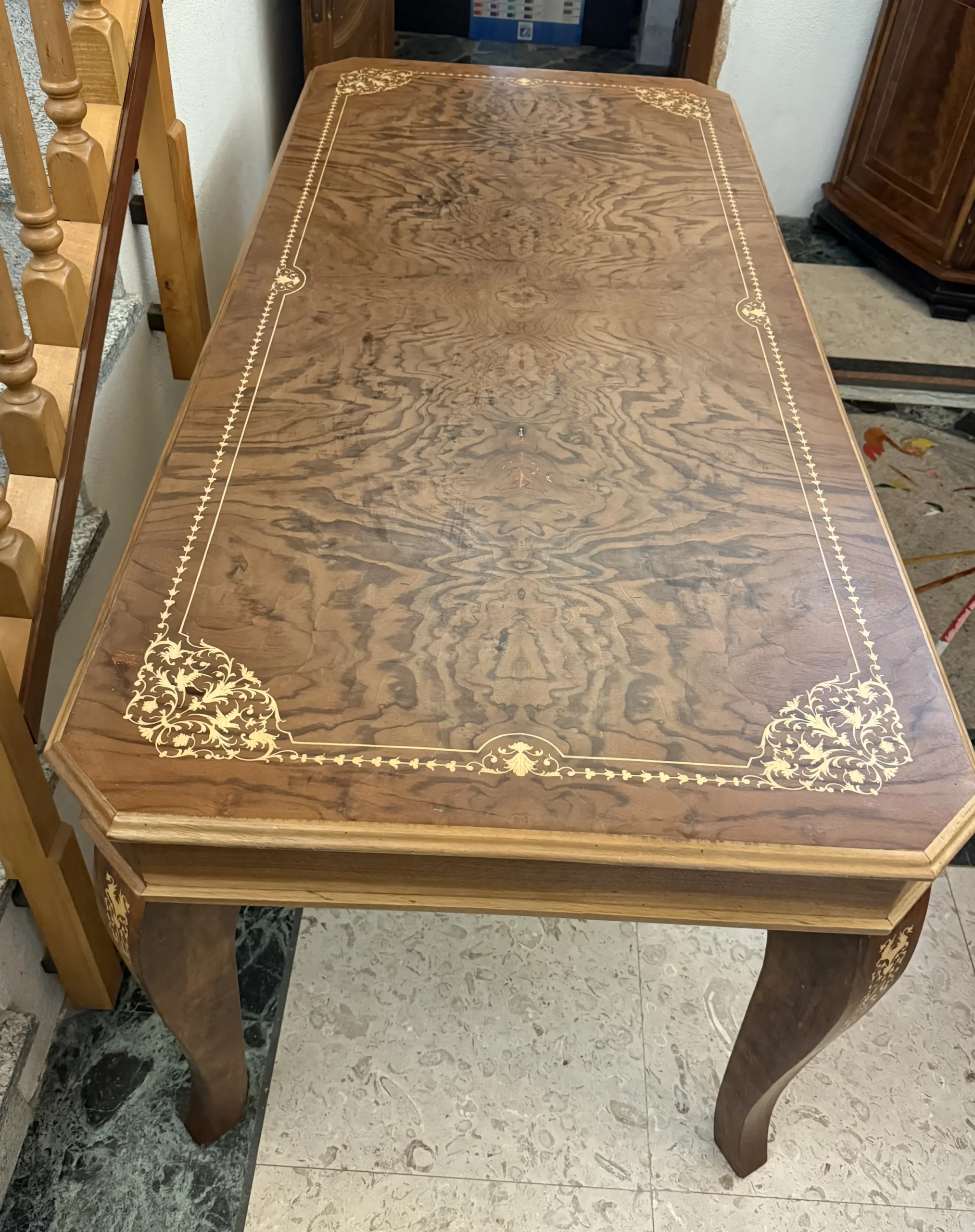
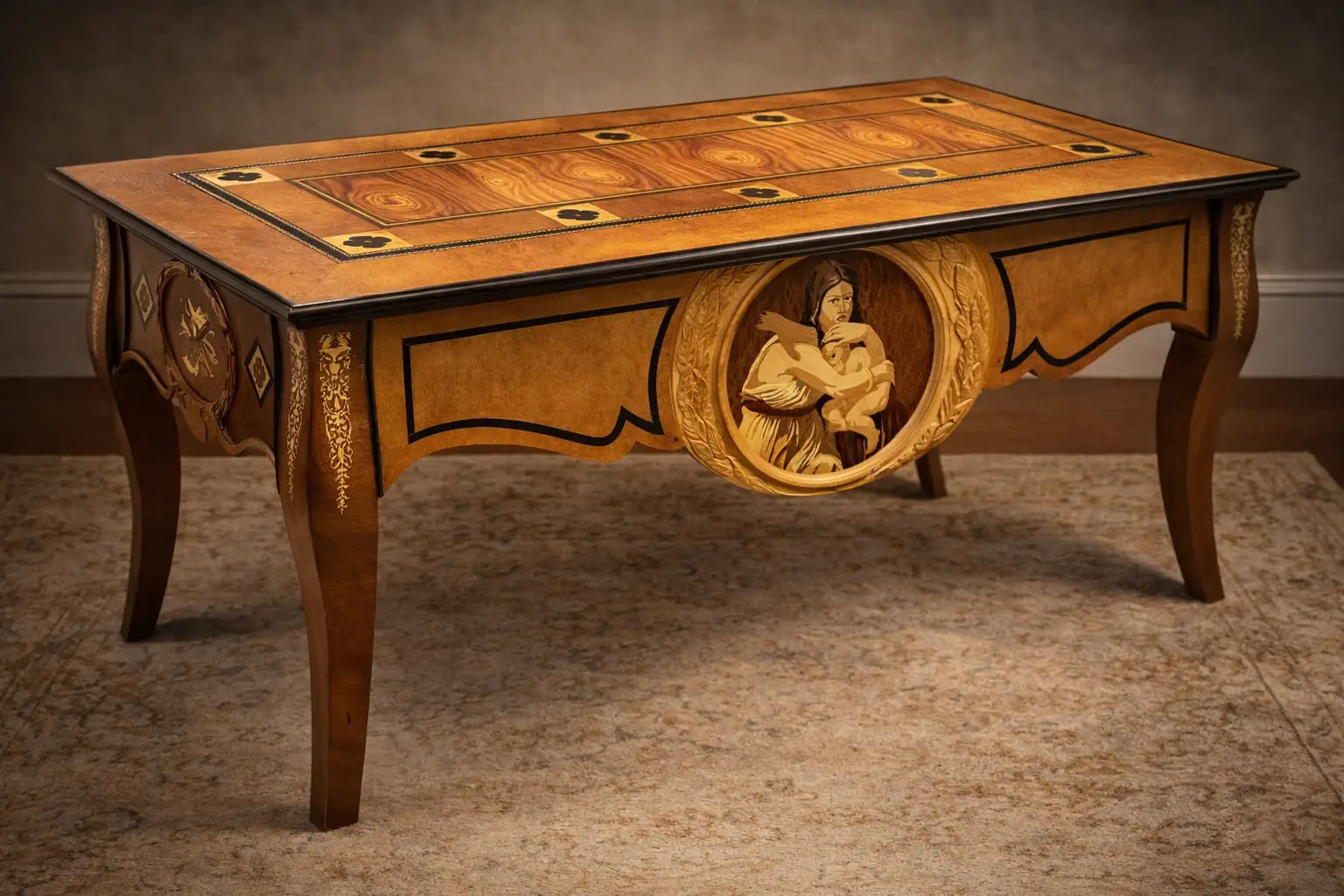
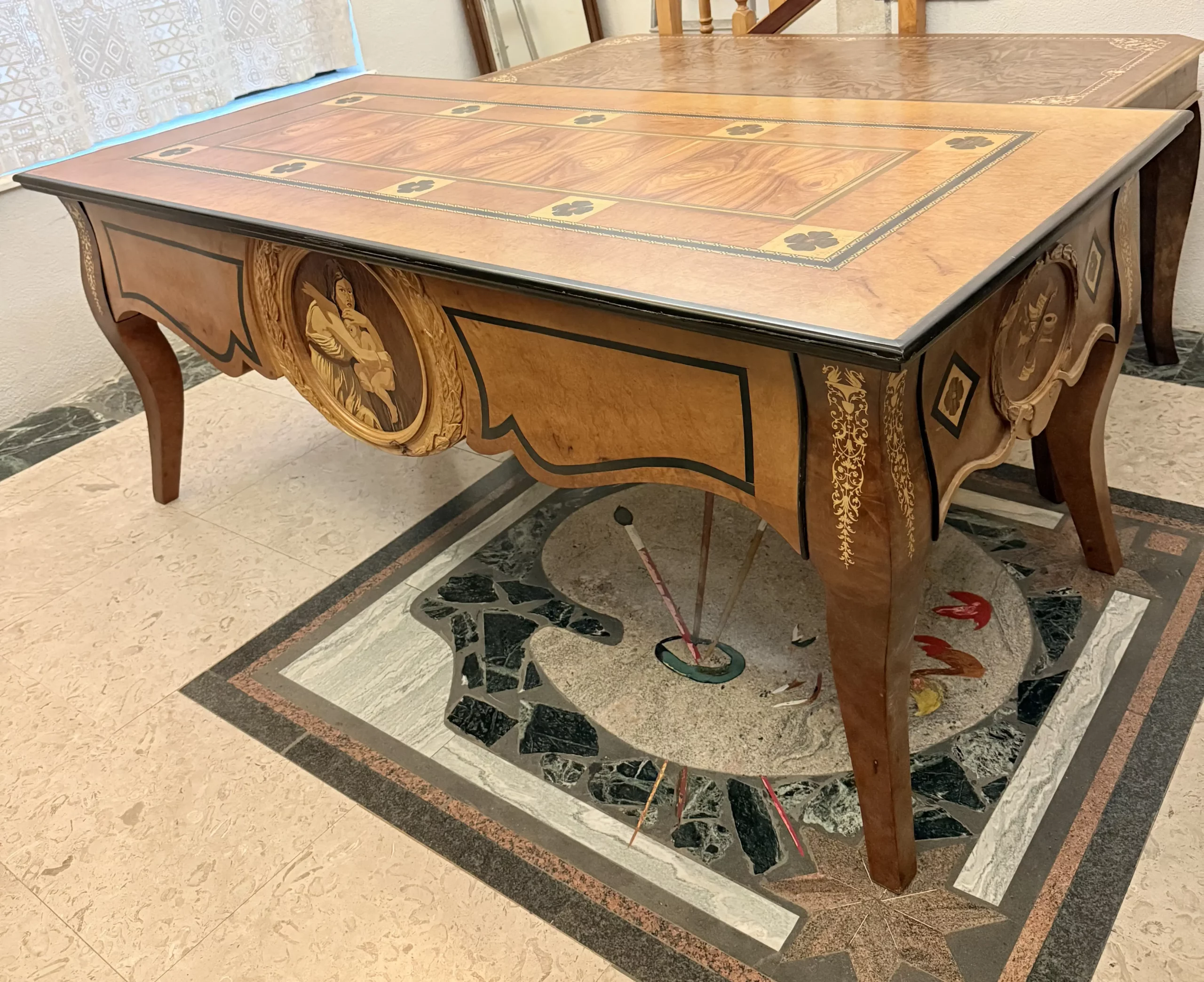
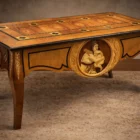
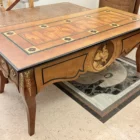
The tabletop is made of rosewood, with a central section in walnut burl arranged in mirrored grain along a longitudinal axis that organizes the entire composition. This central field is enclosed by a frame in walnut and white maple, within which geometric inlays in ebony, maple, and walnut are inserted. These elements are distributed in a regular manner and serve to define the visual space. The surface displays a chromatic range dominated by warm, brown tonalities, articulated through contrasts between light and dark woods.
Dark-toned floral inlays are present on the tabletop, executed in ebony, maple, and padauk and arranged symmetrically along the perimeter. These elements introduce a marked chromatic contrast and contribute to the rhythmic articulation of the composition. The perimeter edge of the tabletop, executed in ebony, clearly defines the profile of the desk and reinforces its architectural reading.
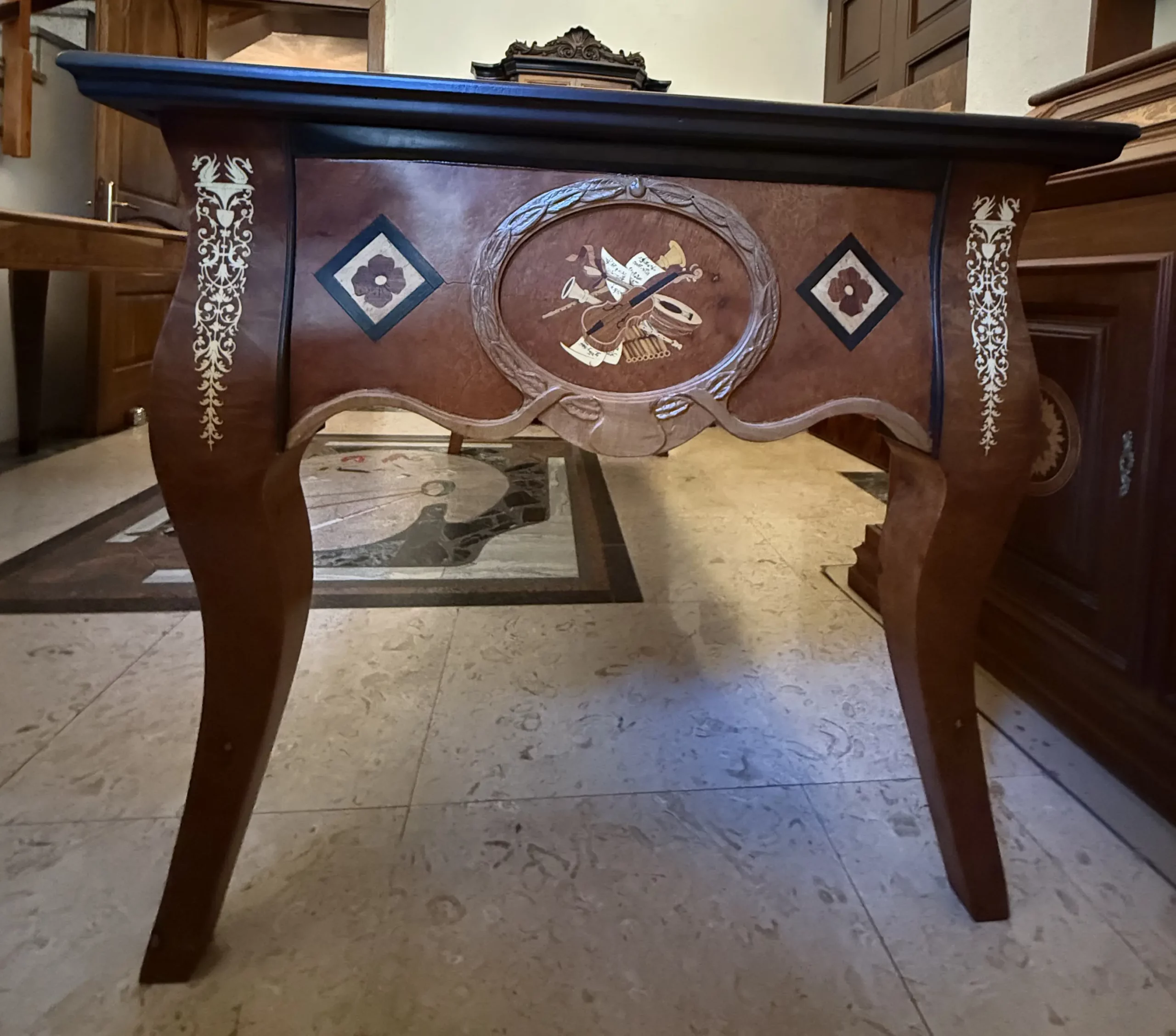
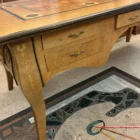
The legs, made of burl wood and shaped with a tapered profile, are decorated with linear white maple inlays that visually lighten their volume while maintaining formal continuity with the tabletop and side panels. The short sides feature diamond-shaped inlays with stylized floral motifs, while at the center of one of the long sides a figurative inlay depicting musical instruments is placed, composed through the juxtaposition of ebony, maple, and walnut. This inlay is enclosed by a hand-carved pearwood frame that separates the image from the structural field of the furniture.
The opposite side features a figurative inlay depicting a female figure protecting a child, realized through layered woods of varying tonalities, with chiaroscuro effects achieved exclusively through chromatic variation of the materials. The composition is frontal and focused on the figures, which are set within a carved pearwood frame serving both to contain the image and to define the visual space of the figurative field.
The structure includes five drawers aligned along the long side, integrated into the lower band without formal interruption, contributing to the horizontal articulation of the overall form. Light interacts with the polished surfaces and the different wood species, enhancing the depth of the grain and the legibility of the inlays, confirming the desk as a work in which cabinetmaking, figurative marquetry, and compositional organization converge into a single coherent object.