



Description
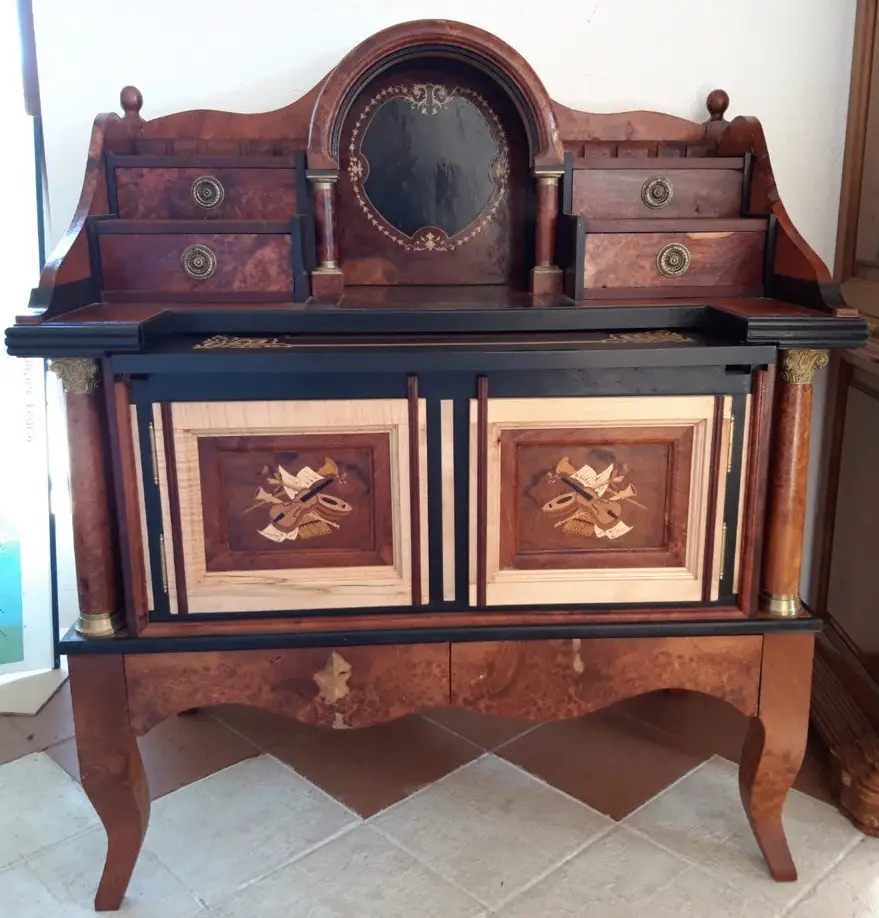
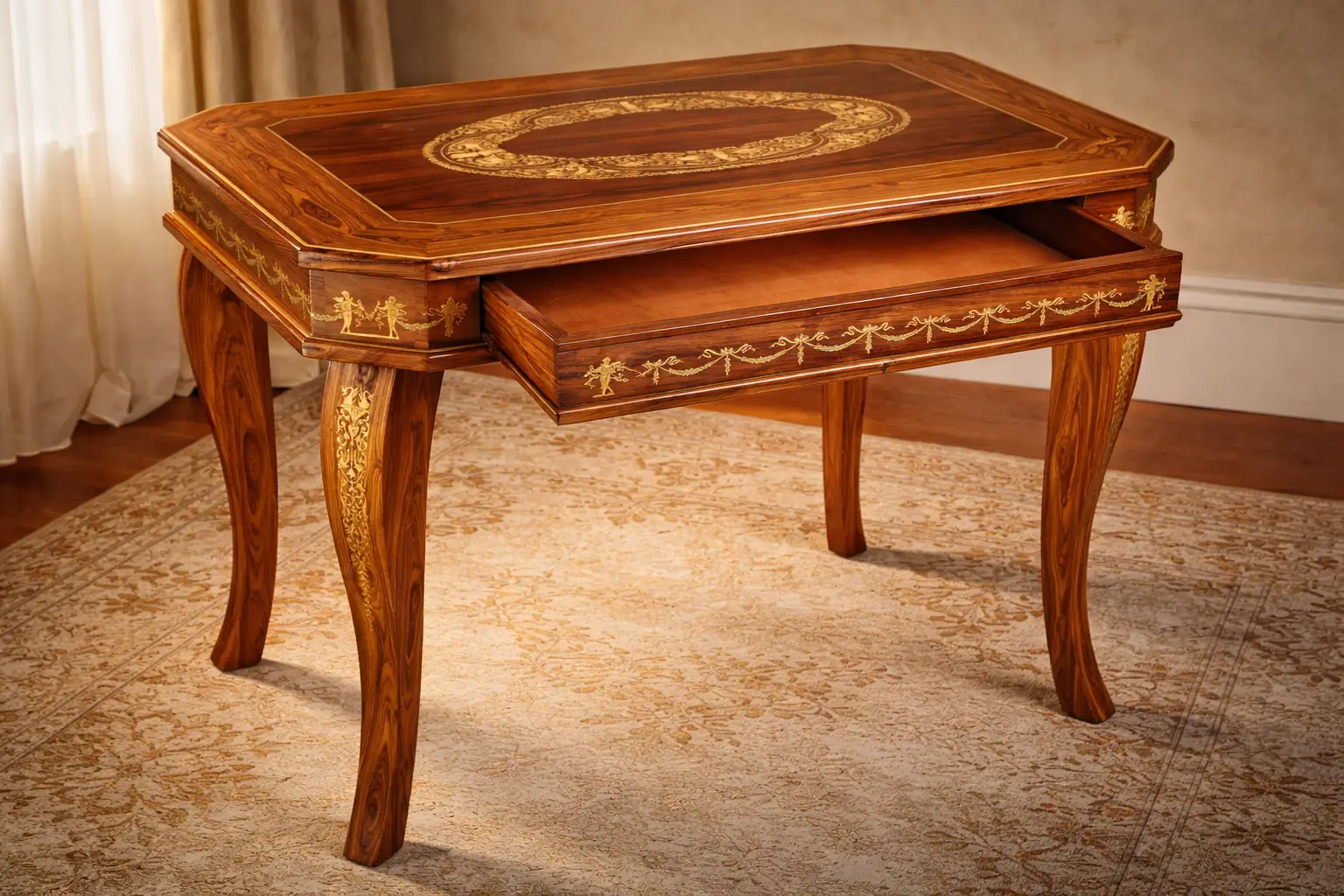
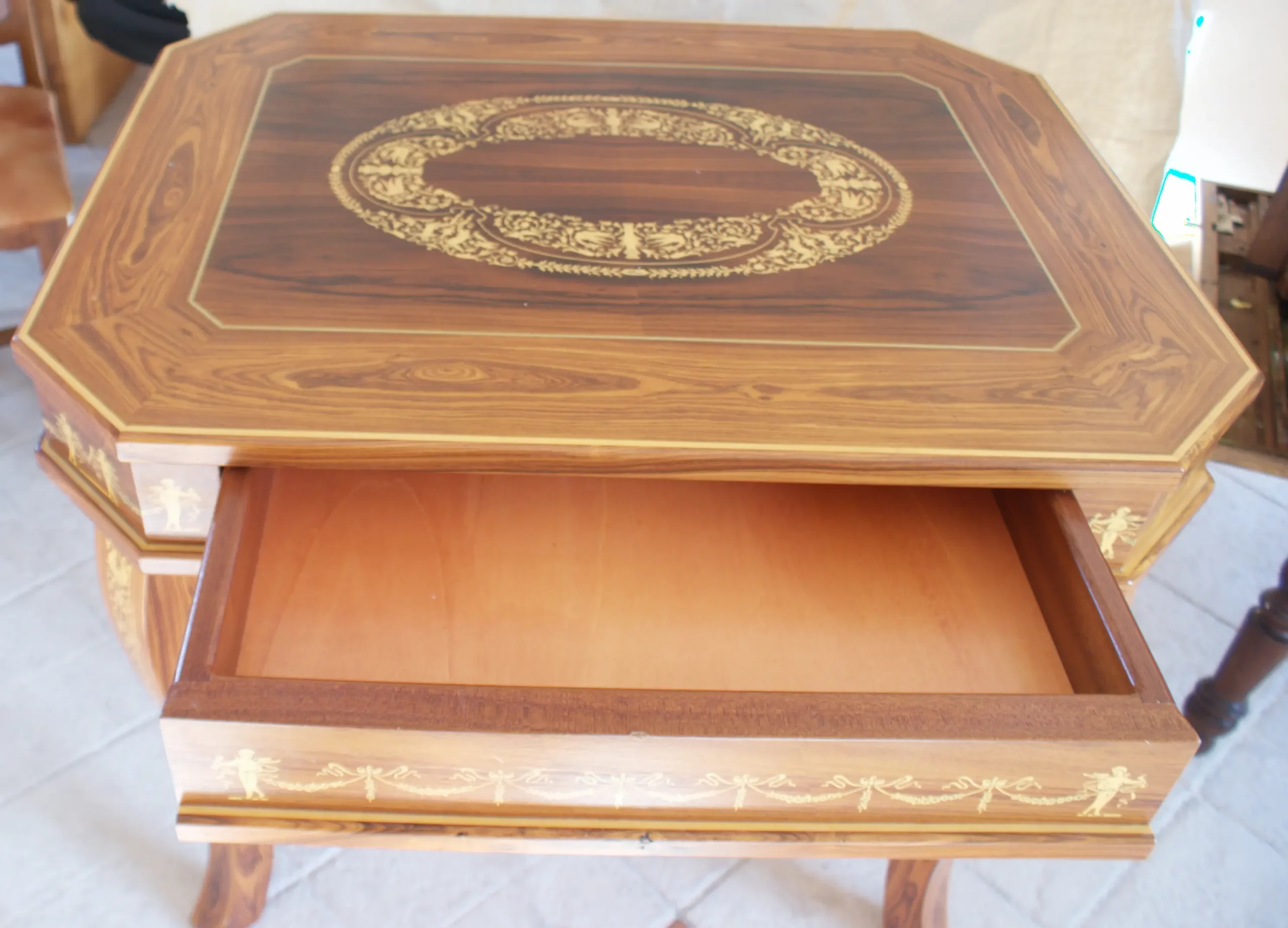
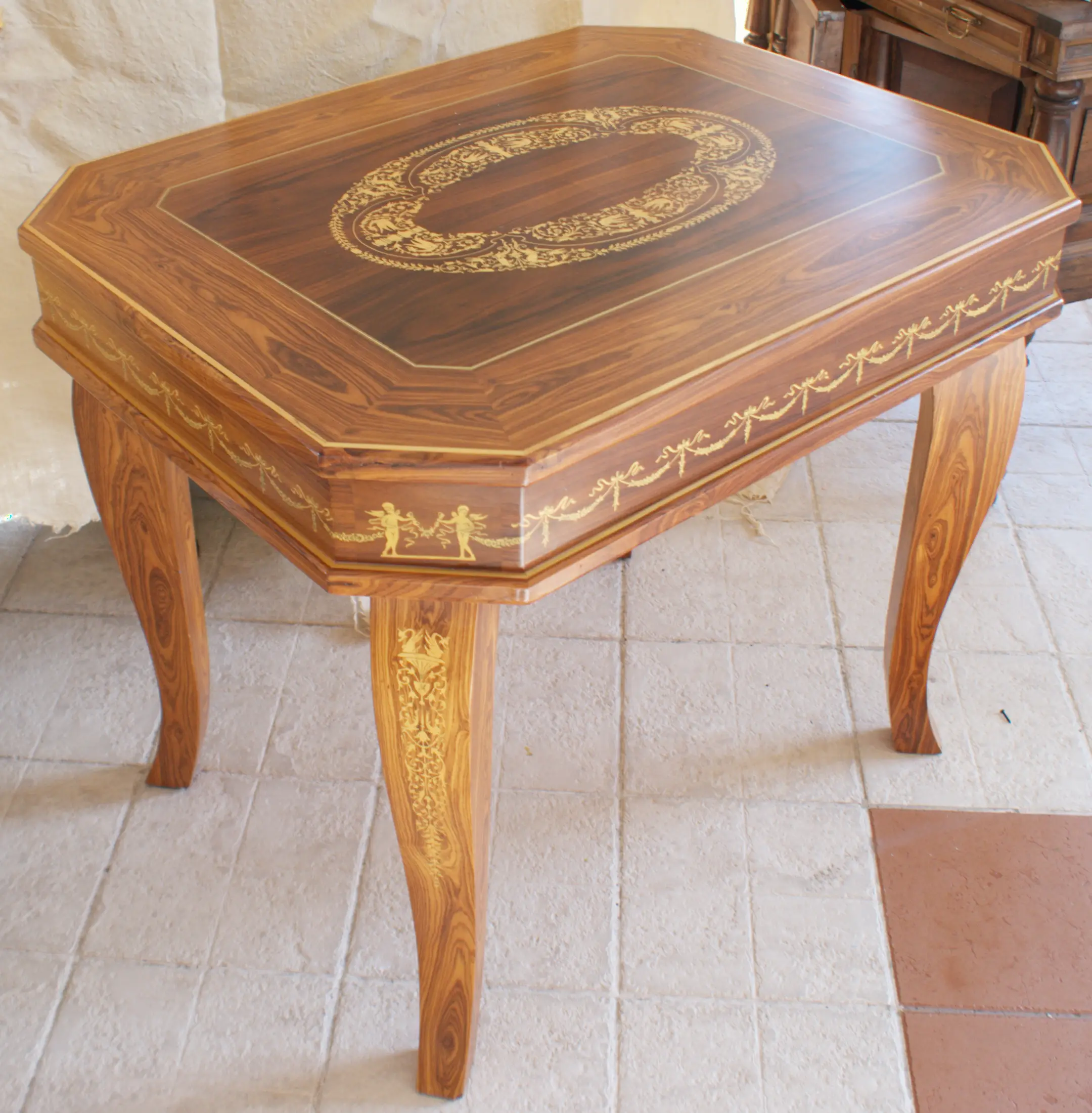
This unique work of artistic cabinetmaking belongs to the field of applied arts and reflects a synthesis of function and formal research within the production of Aly Mohsen. Conceived as an autonomous object, the desk is executed using traditional handcraft techniques of woodworking and marquetry, characterized by a restrained monumental presence.
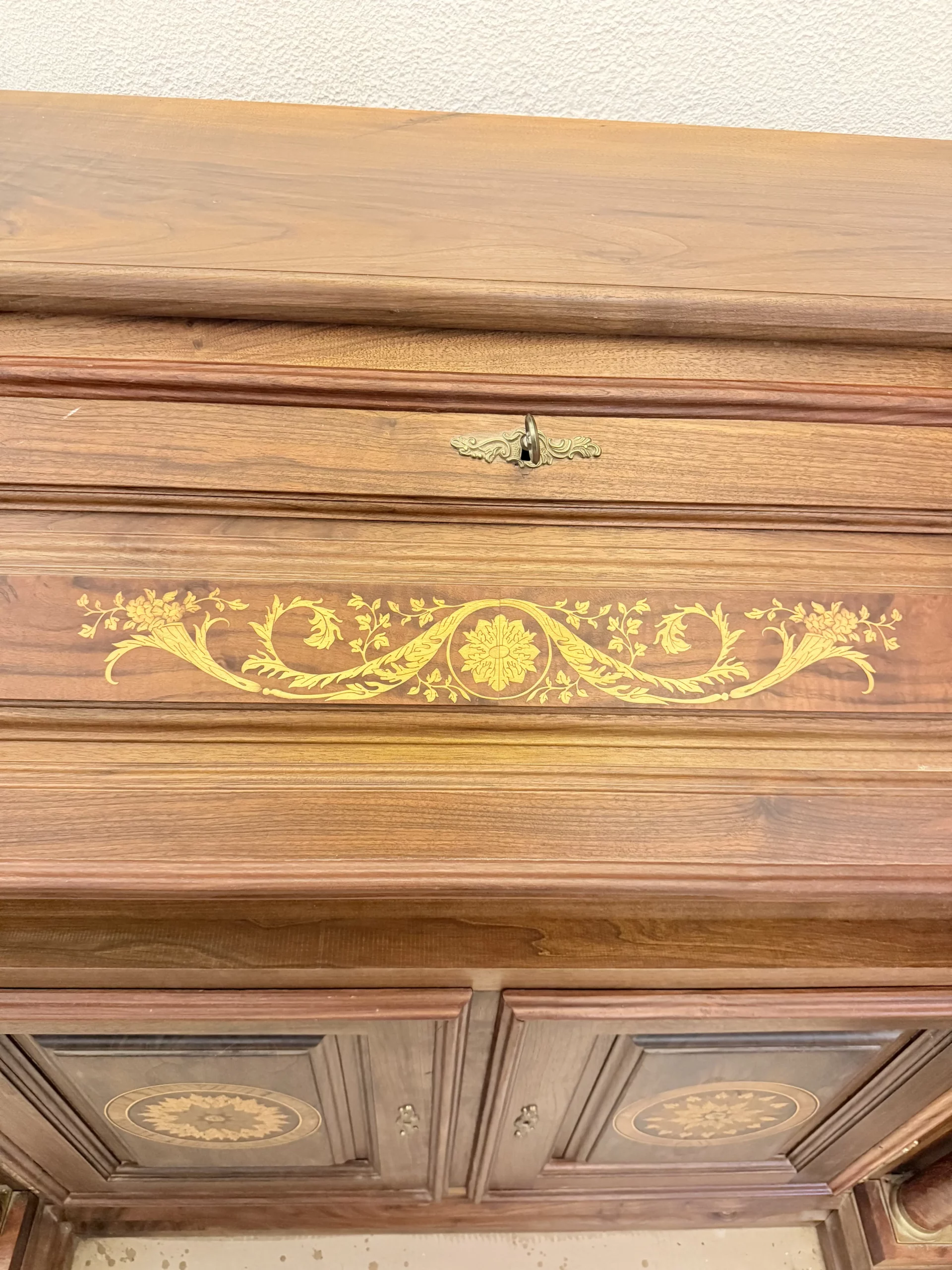
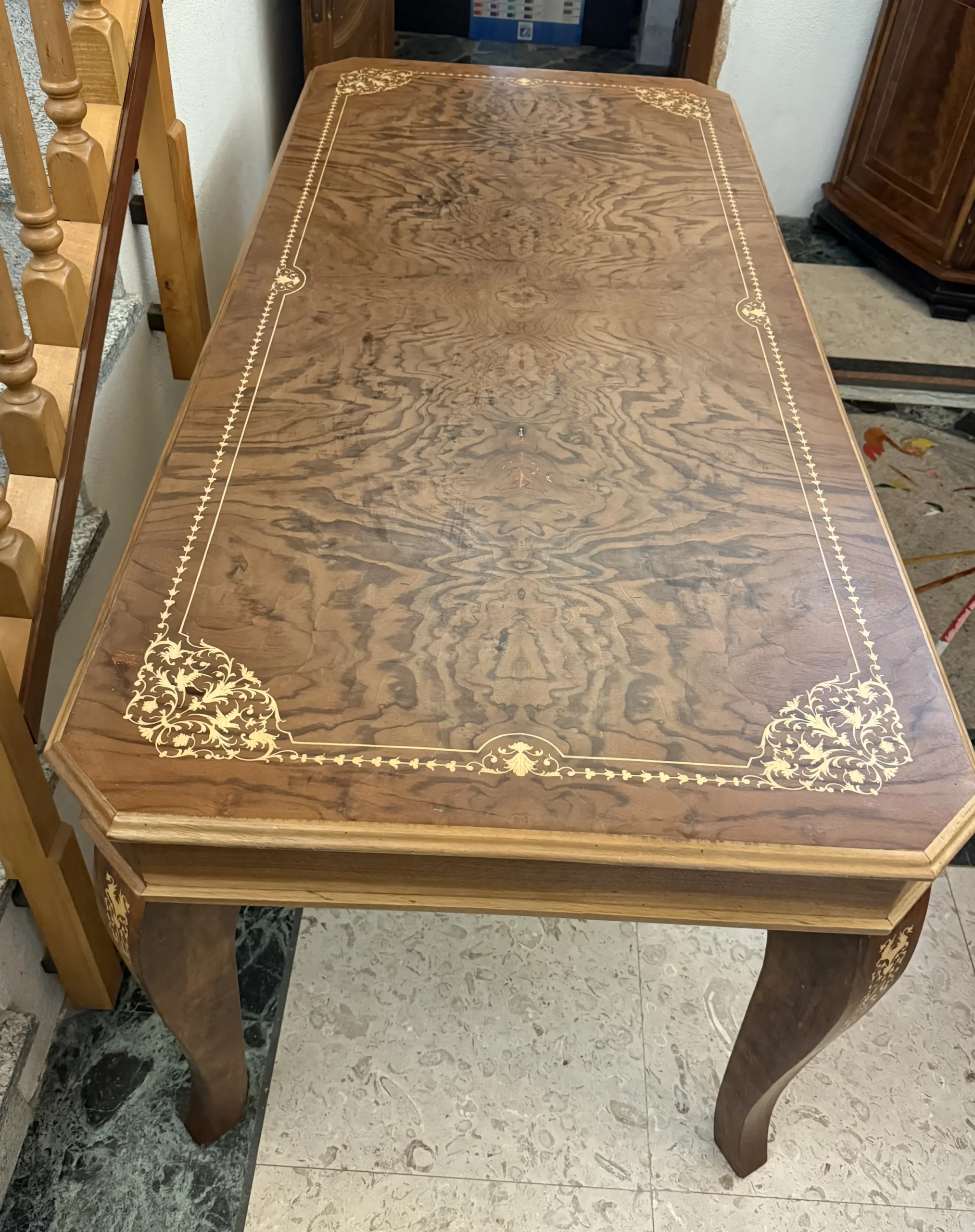
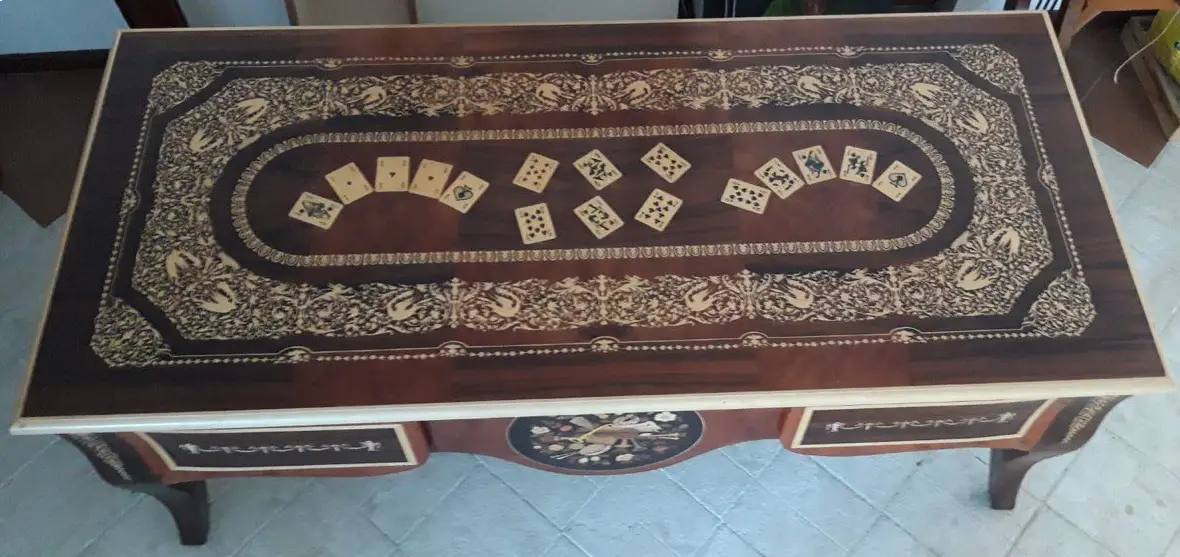
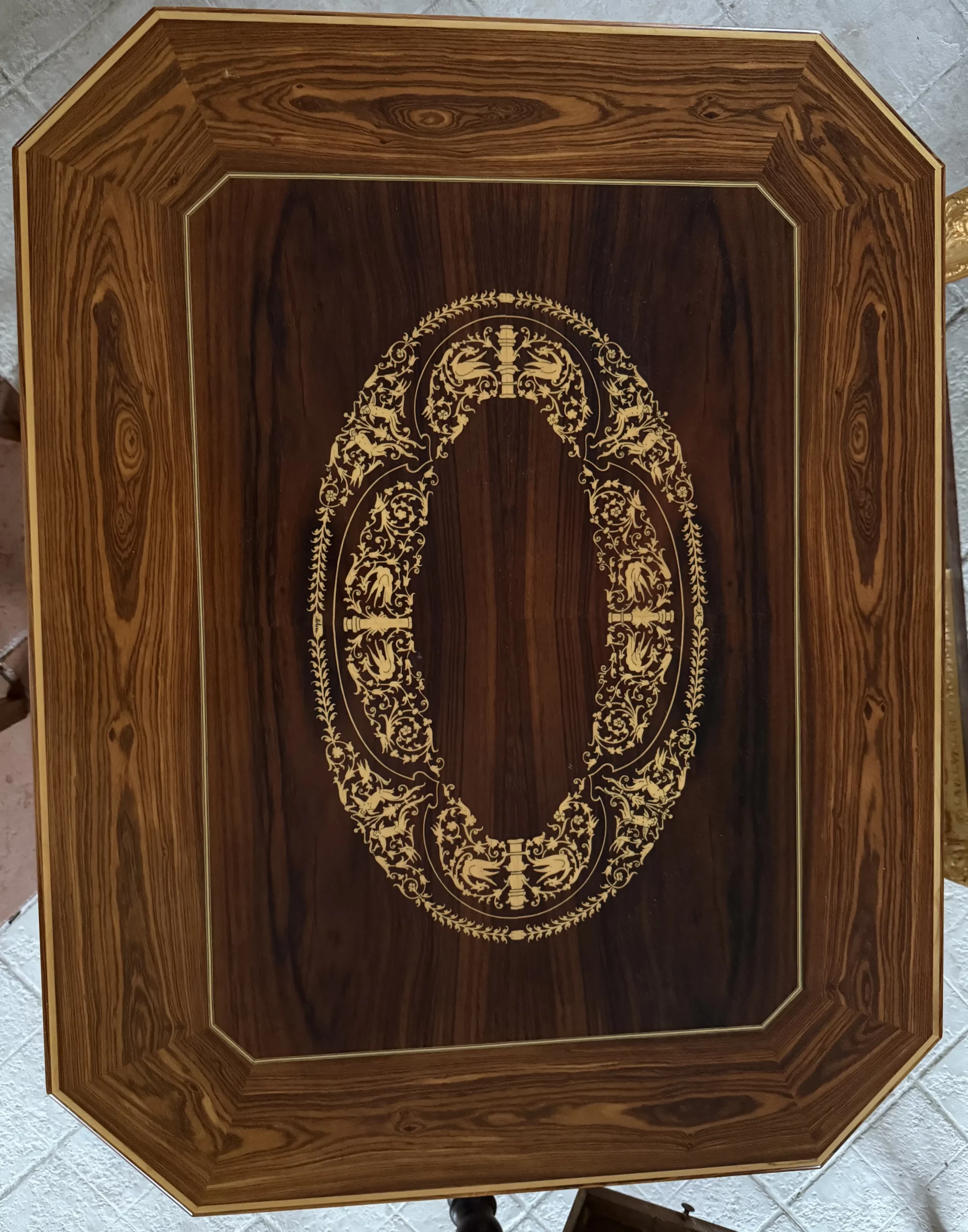
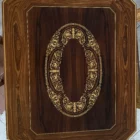
The structure is made of Italian walnut, selected for its structural stability and chromatic depth, combined with rosewood in warmer, reddish-brown tones used to define the main surfaces and volumes. The octagonal tabletop features a central white maple inlay, entirely hand-crafted, arranged in a classically inspired ornamental pattern and framed by a perimeter border that visually organizes the surface.
The side panels and sculpted legs are further enriched with white maple inlays depicting allegorical figures and floral motifs developed in a rhythmic sequence. Ornamentation is integrated into the structure rather than applied to it, reinforcing the coherence between architectural form and decorative language.
The careful combination of wood species creates a controlled chromatic balance, while the restrained finish is intended to enhance the natural grain of the materials and the precision of the marquetry, avoiding any surface emphasis.
The desk is conceived as a functional work of art, suitable for representative interiors, exhibition spaces, or environments dedicated to the applied arts, and stands as a testimony to a cabinetmaking practice grounded in manual craftsmanship, unified design, and continuity with the European historical tradition.