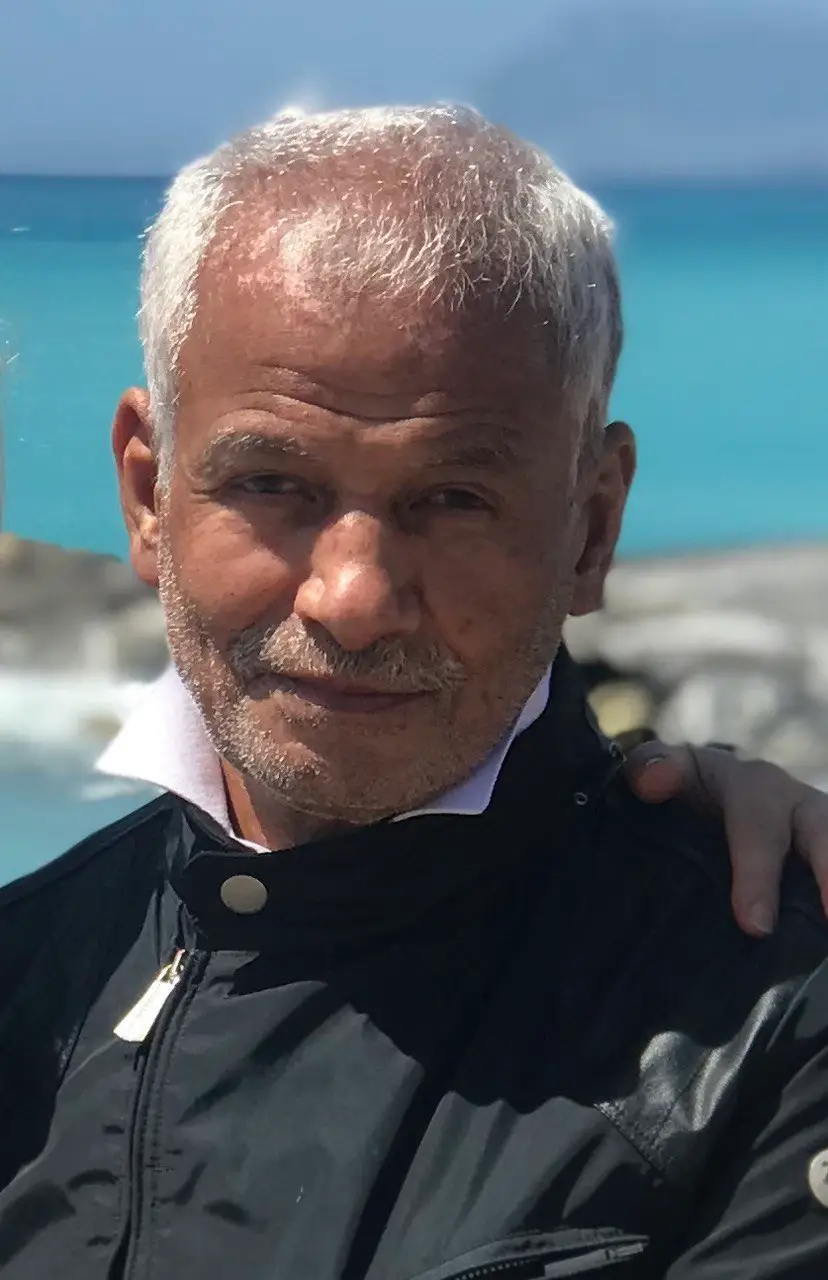
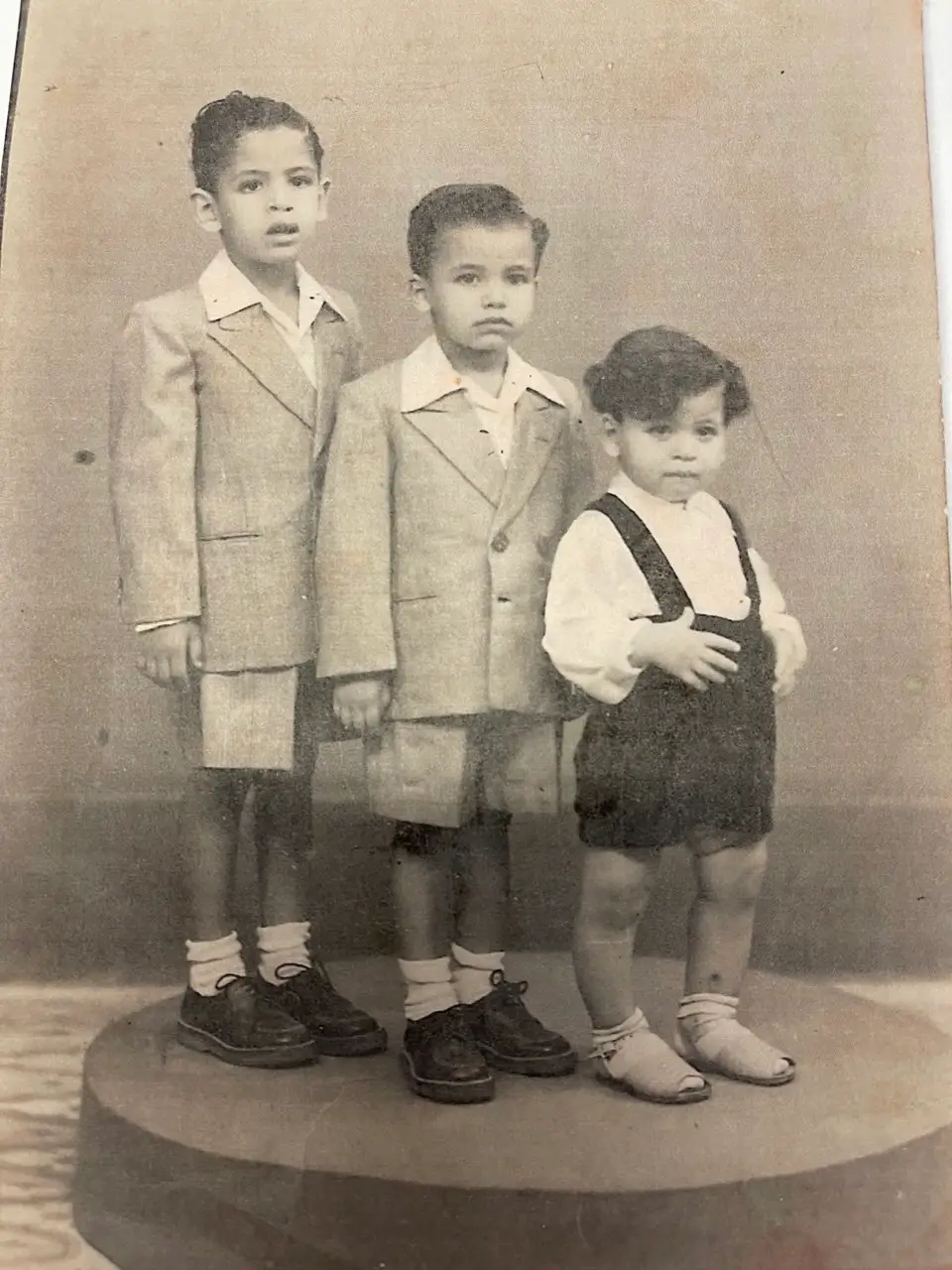
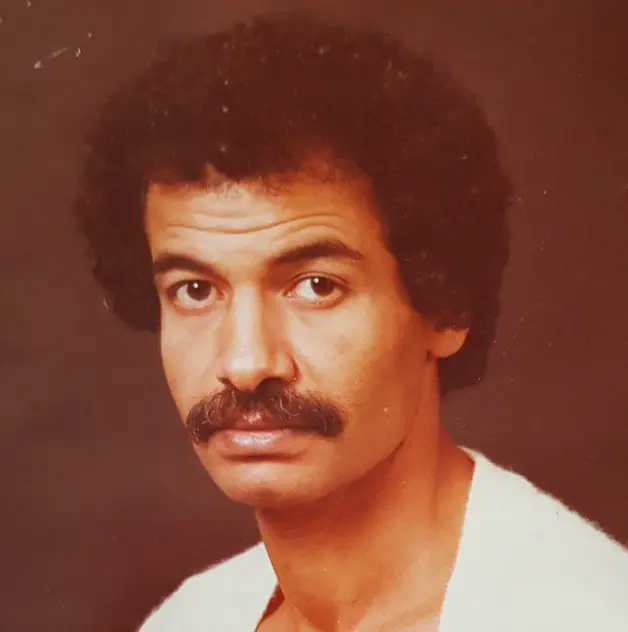
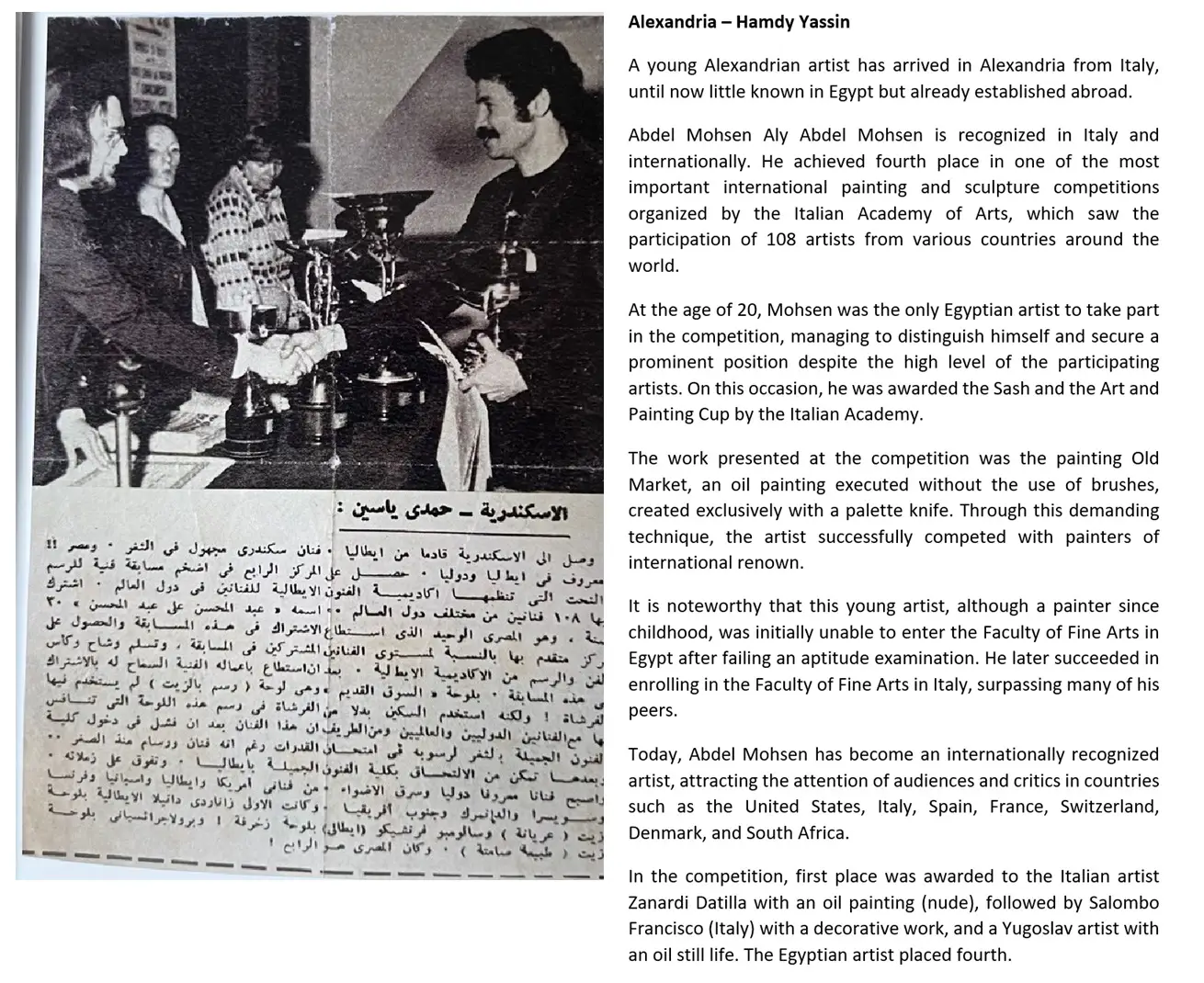
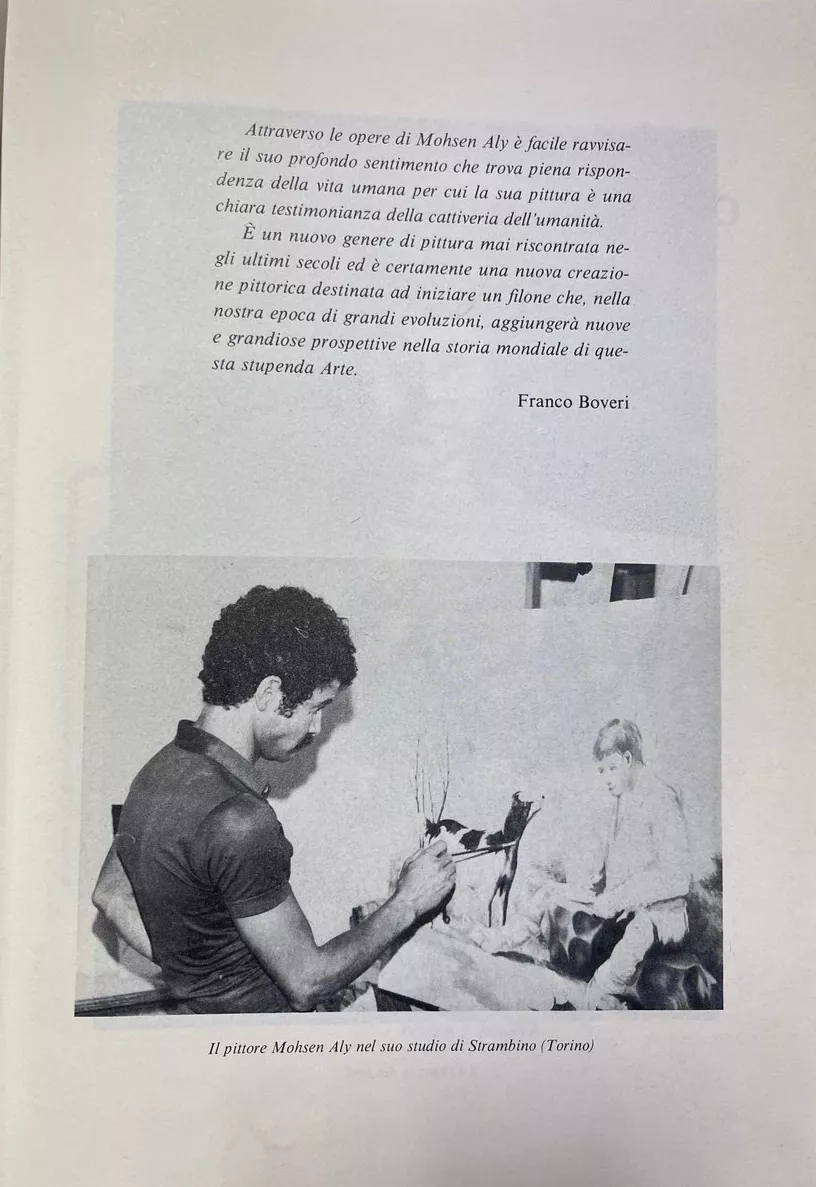
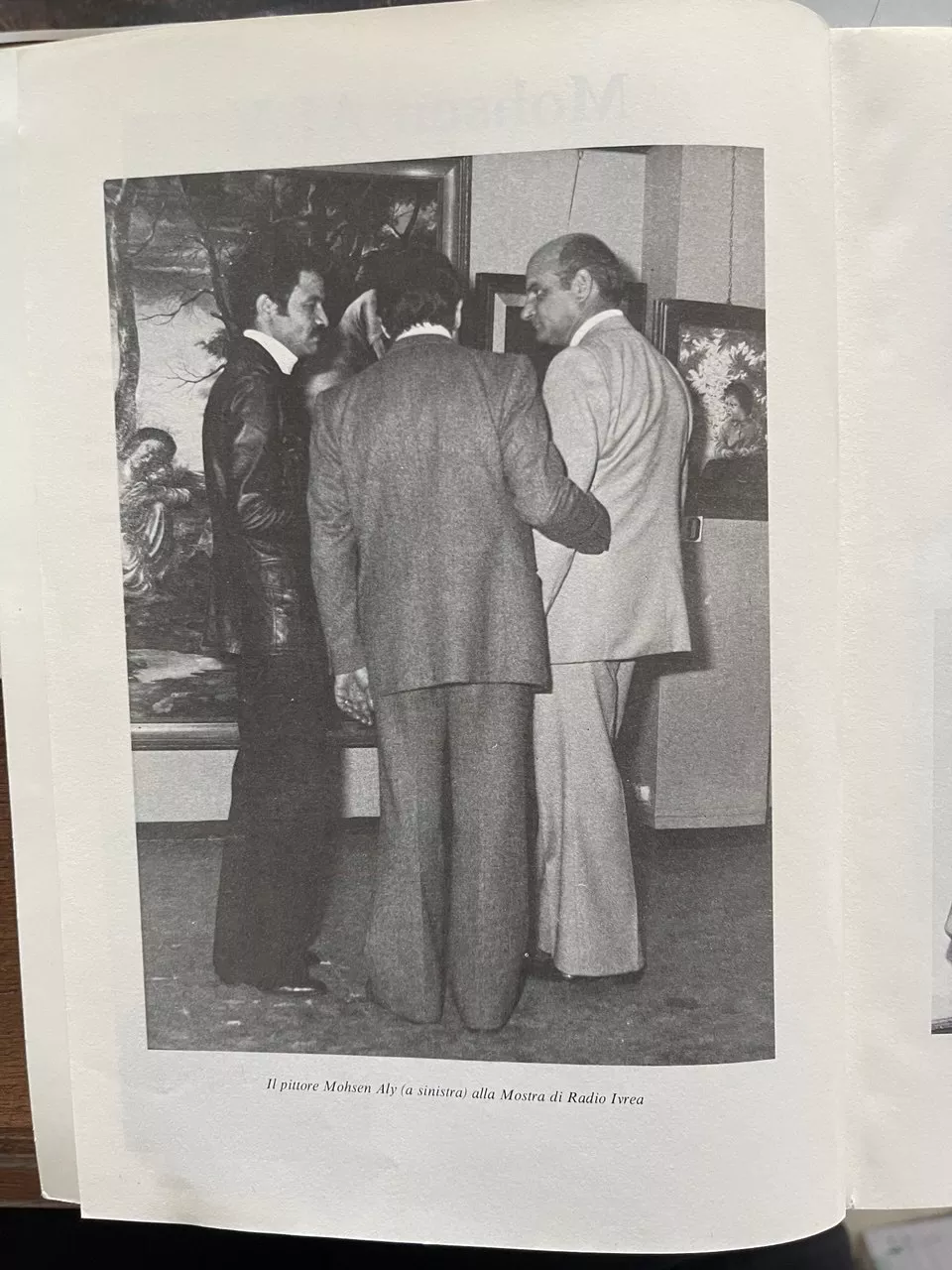
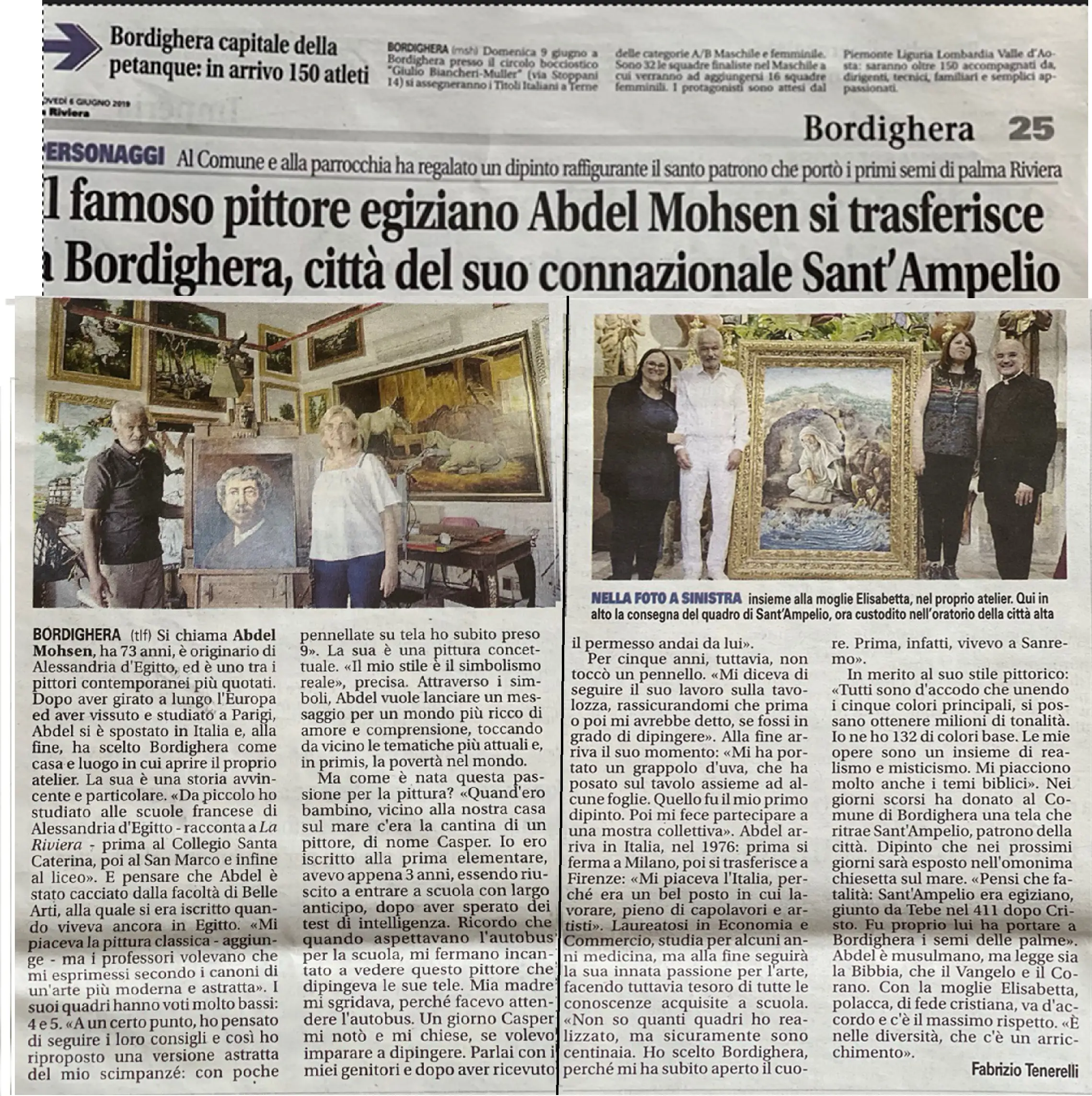
In this foreword, we attempt to convey impressions that could hardly emerge from a cold chronological listing of events.
We begin by stating that Mohsen Abdel’s life was undoubtedly extraordinary, in the literal sense of being “out of the ordinary.” The experiences he lived would require at least three lifetimes for an ordinary person, and the anecdotes alone could fill an entire book.
We were direct witnesses to the “peaceful” phase of his life, when he fulfilled the role of a family man, yet even in this period there were events worthy of anecdotal record.
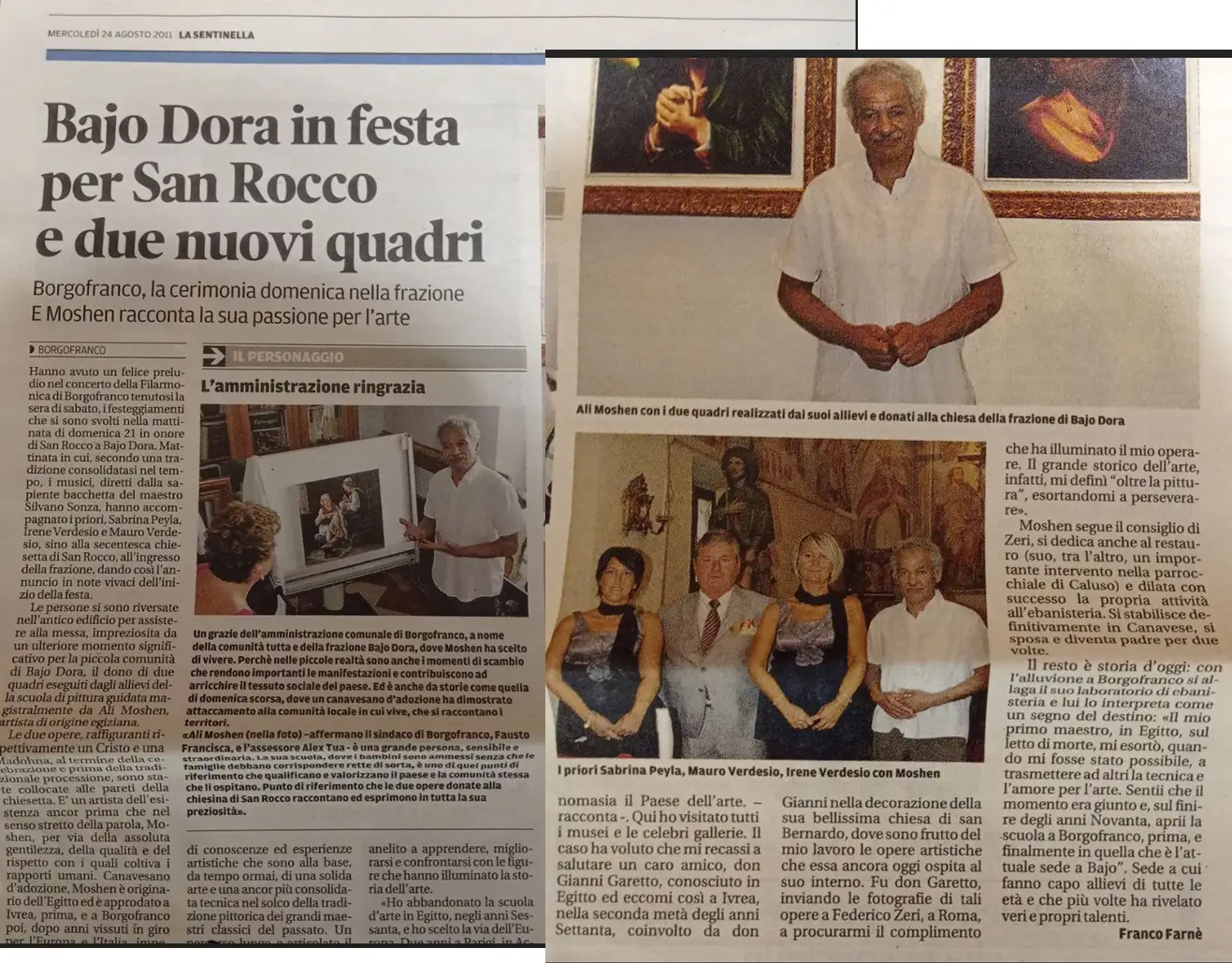
The preceding phase was the “adventurous” one, during which he moved from luxury to living day by day, encountering heads of state, royal families, intelligence services, and internationally renowned artists. This cast of characters becomes almost surreal when one considers that, during the “peaceful” phase, he often spent his days teaching painting to elderly village women who spoke only the Piedmontese dialect and adored him.
The main qualities that distinguished him were curiosity and humility, along with profound generosity toward those in need.
Curiosity, understood as a thirst for knowledge and sharp observational skill, led him to acquire both theoretical and practical expertise in countless fields. He could genuinely converse with anyone about anything and solve almost any problem that arose.
Setting art aside momentarily, he was highly knowledgeable in chemistry and, as a boy, had set up an experimental laboratory in the family home. He had a solid grasp of economics and business, earning a degree in economics and commerce and serving as deputy director of procurement at the Port of Alexandria in Egypt. Olivetti relied on him to repair precision machine tools due to his remarkable mechanical skills. Many of the machines in his workshop (lathes, presses, milling machines, etc.) were restored by his own hands.
Added to this was his military training, which led him to pilot a MiG-17 and fight in the 1973 Yom Kippur War against Israel, as well as his deep knowledge of history and theology. We witnessed many discussions on these topics even with highly credentialed academics.
Despite his past, his humility led him to prefer the company of ordinary people and to avoid all forms of ostentation. This trait undoubtedly penalized him commercially, leading him to avoid publicity and integration into the art gallery system, especially during the “peaceful” phase of his life.
Finally, his generosity, which often led him to give away his own food to those hungrier than himself, stemmed from an unshakable faith. One of his favourite sayings when any of us expressed financial concern was:
“God has never left me without food”
To someone who spent six months in solitary confinement in “death cells” with legs scarred by rats attacking him at night, everyday worries must indeed have seemed insignificant.
This biography was not written by a professional writer or by artificial intelligence, but by his family: his wife Elisabetta and his children Sami, Sara, and Cristian, who shared the same roof with Mohsen Abdel for more than 35 years.