Themes
Mohsen’s art falls within the tradition of symbolic realism. Through the depiction of real subjects and situations, the artist highlights the evils afflicting humanity, with the aim of raising awareness in the viewer.
As he himself stated:
“Through my works, I am searching for a human world richer in love and understanding”.
This classification is attested to by art critics and specialist publications that have reviewed his work.
The themes addressed by Aly Mohsen span both intimate and collective dimensions, ranging from memory and social critique to the symbolic representation of reality.
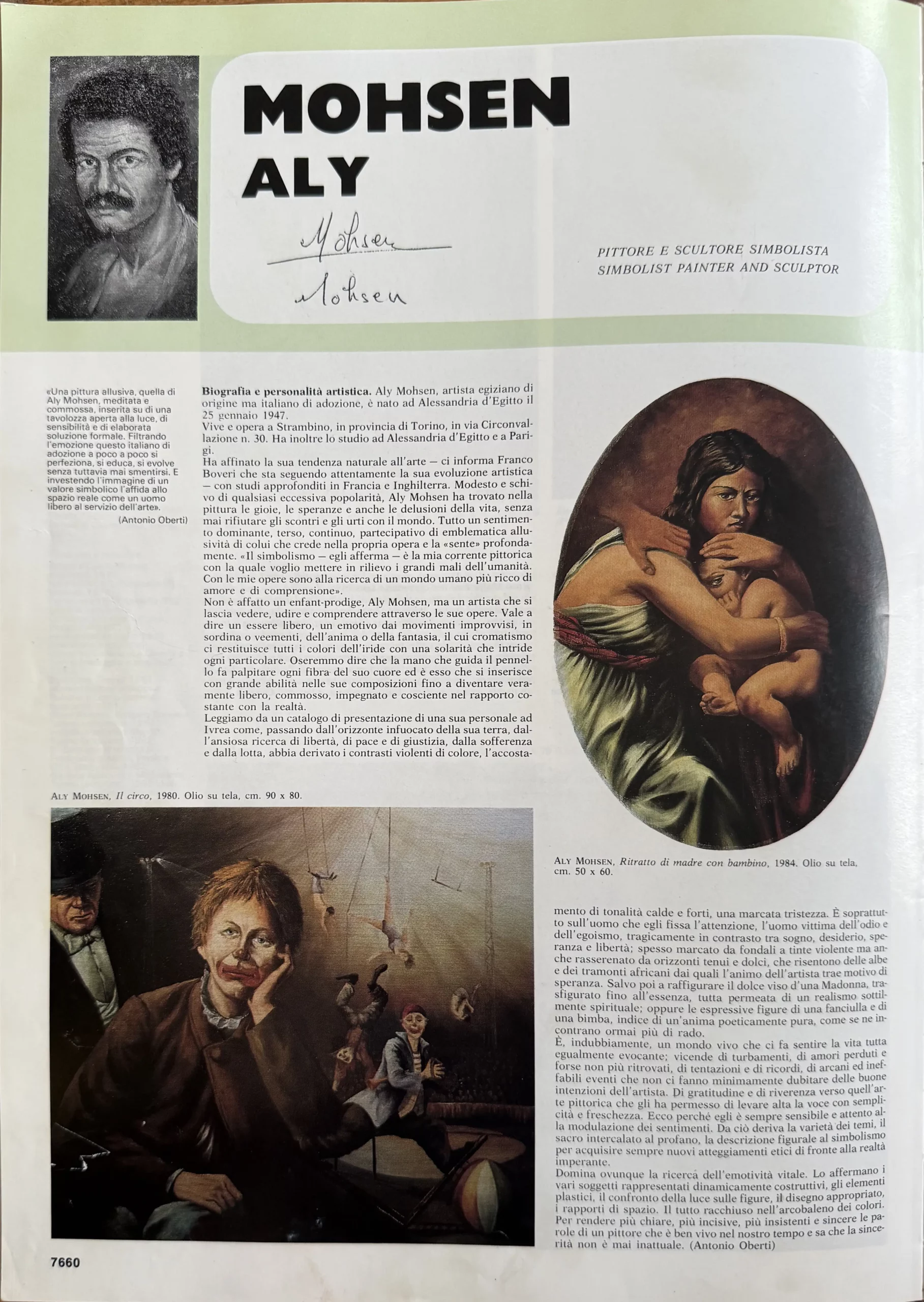
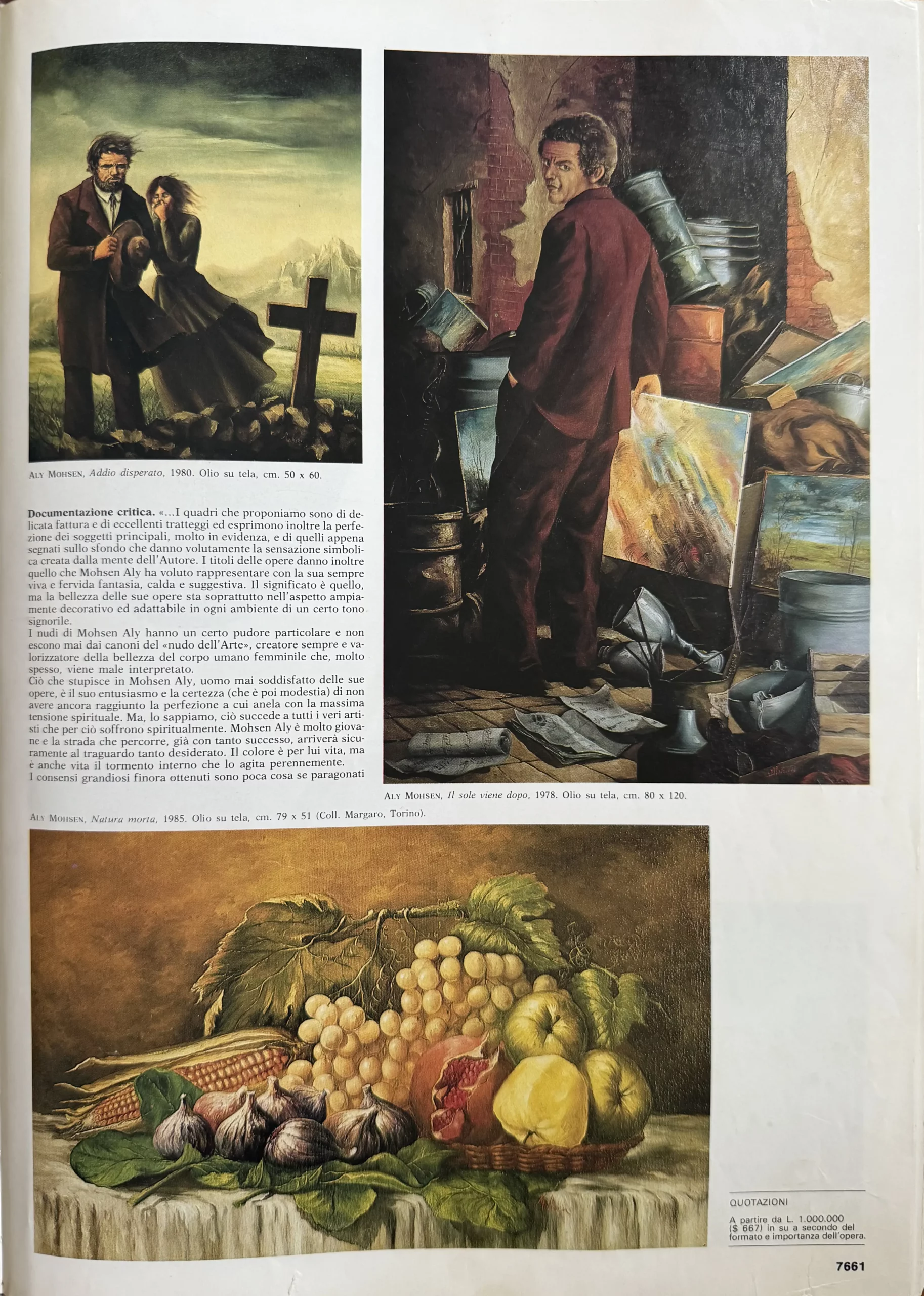
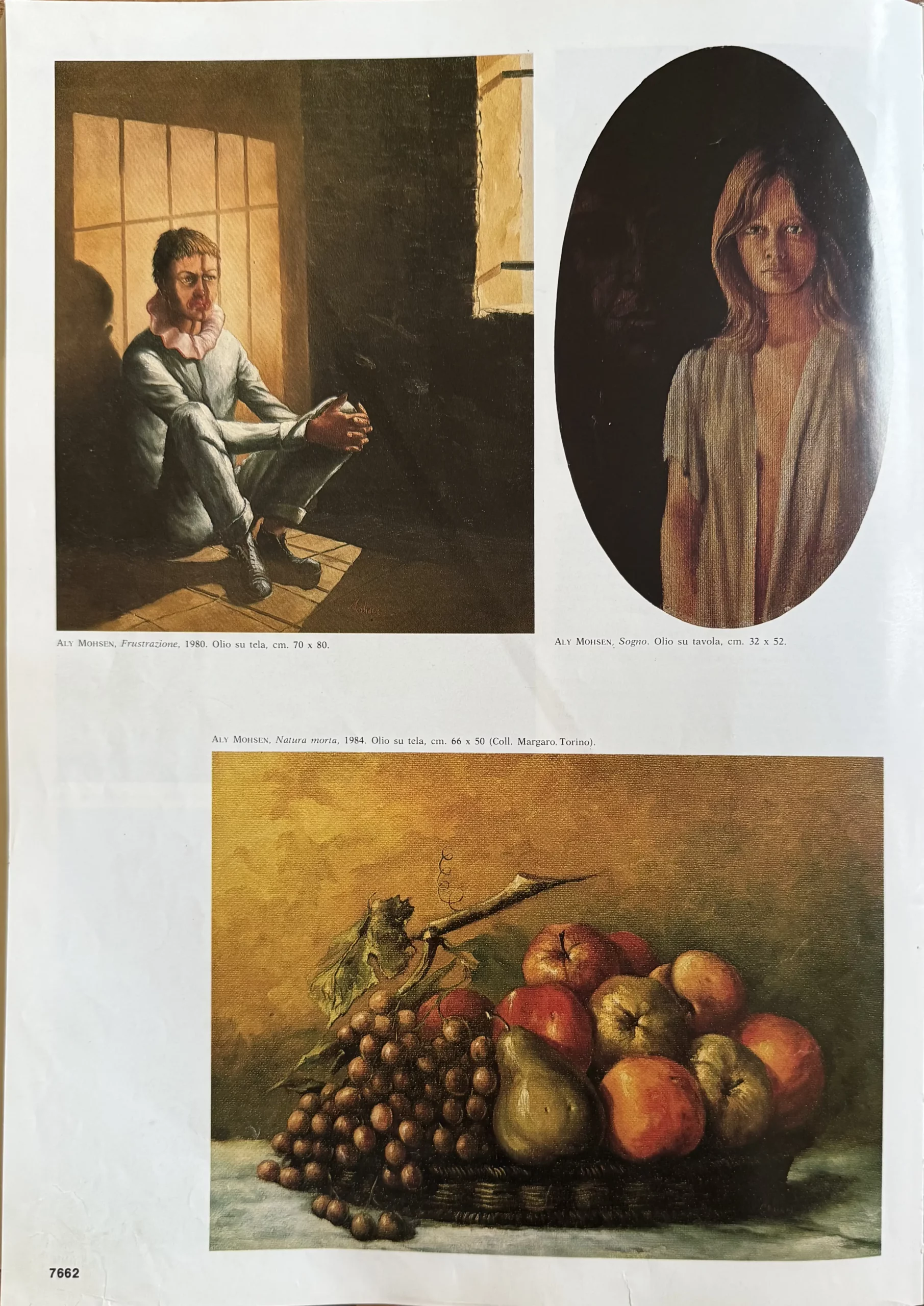
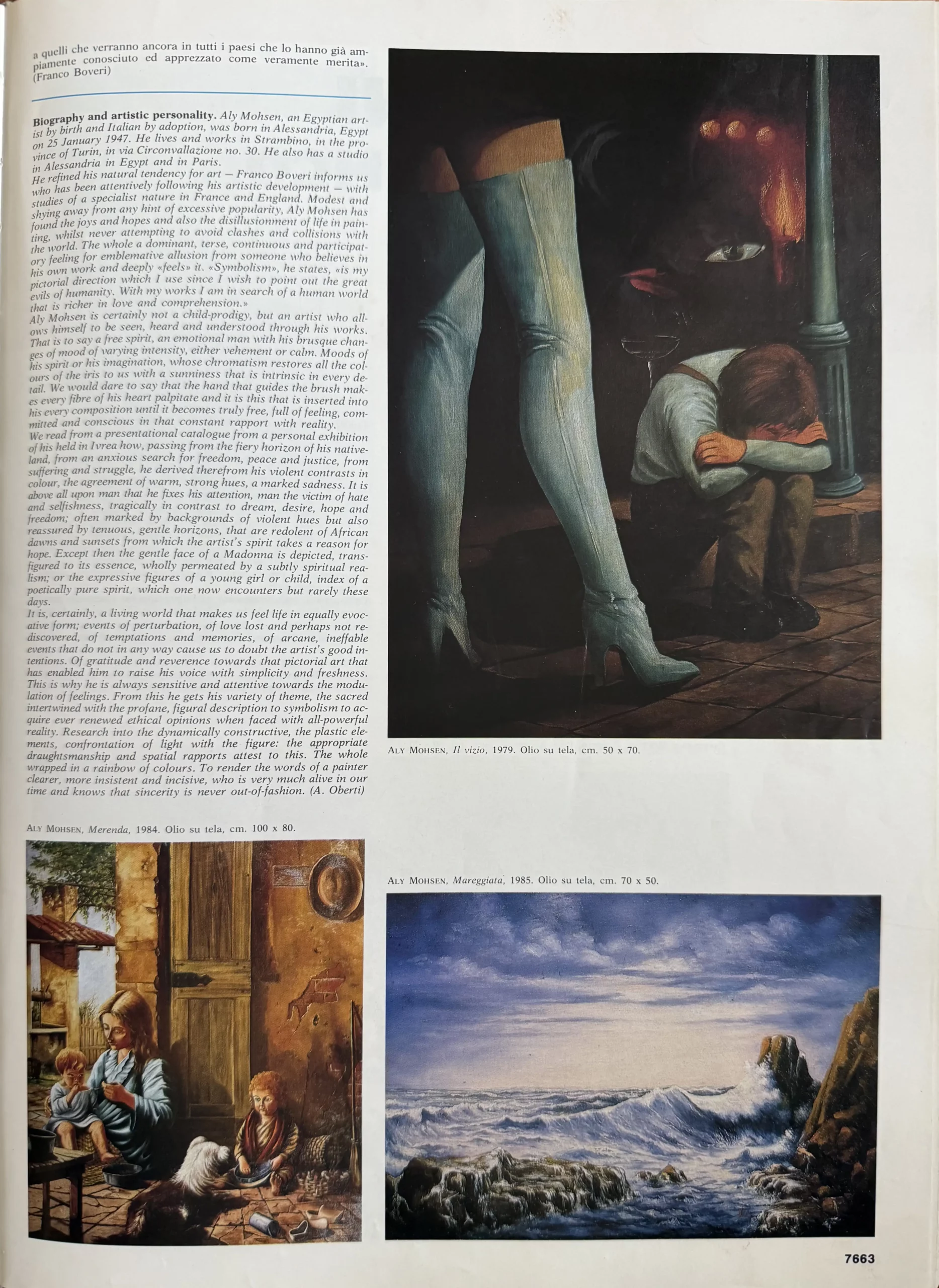
Pages from the international volume “Italian Art in the World”dedicated to Aly Mohsen, with a critical biography and reproductions of some of his works.
The publication documents the artist’s recognition in the contemporary figurative art scene.
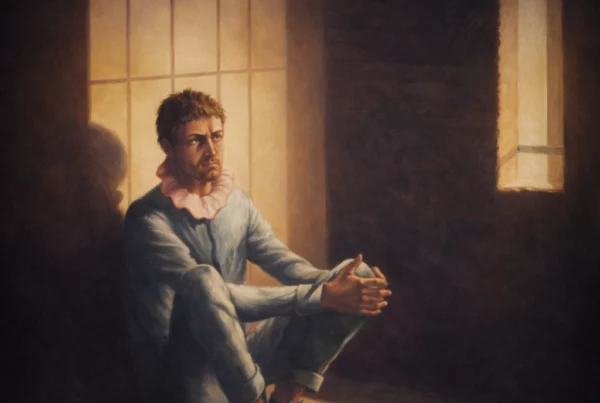
Among the hundreds of paintings he created, some can be considered emblematic of Symbolic Realism: Il Sole Viene Dopo, which reflects his relationship with art; Vice, dedicated to the suffering caused by the lack of maternal love; Frustration, focusing on the injustice of arbitrary detention; and The Three Seasons of Life, a synthesis of human existence.
The World Today
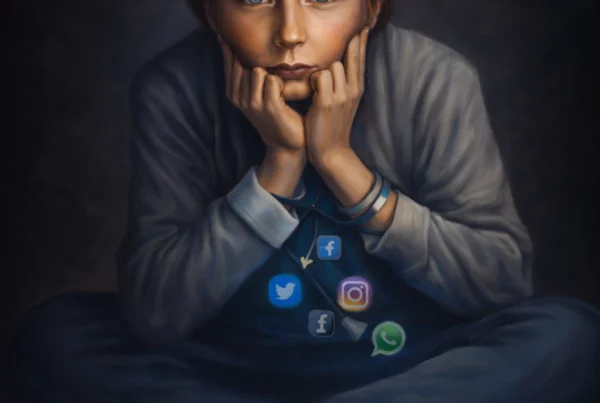
The ‘Today’s World’ category includes works that denounce technological alienation (The Media Prison, The Trap of Progress), the hardships of immigration (Concentration Camp for Children in the USA, I Seek Life, Go Away), environmental destruction (Stop Deforestation, Nature Rebels) and the absurdity of war (We Seek Peace, Where Is the World Heading?).
Once upon a time
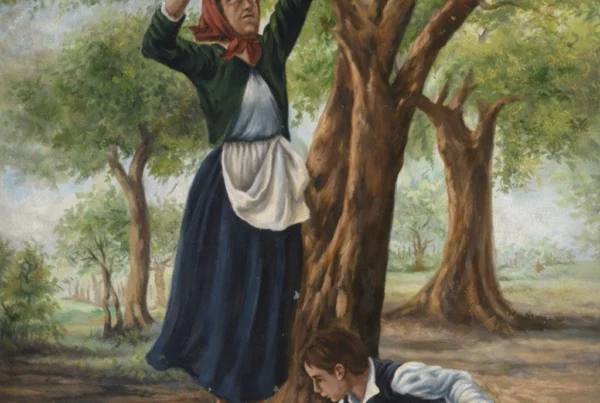
This category brings together paintings depicting scenes from everyday life in the past, often featuring ordinary people or domestic situations. Through these subjects, Mohsen captures the gestures and atmosphere of simple life, whilst also exploring universal themes such as love (Thank You Mum, Innocent Love, Motherly Love).
This section also features copies of works by artists admired by the artist, including Antonio Rotta and, above all, Bartolomé Esteban Murillo, a Baroque painter known for his genre scenes featuring children and ordinary people.
Sacred art
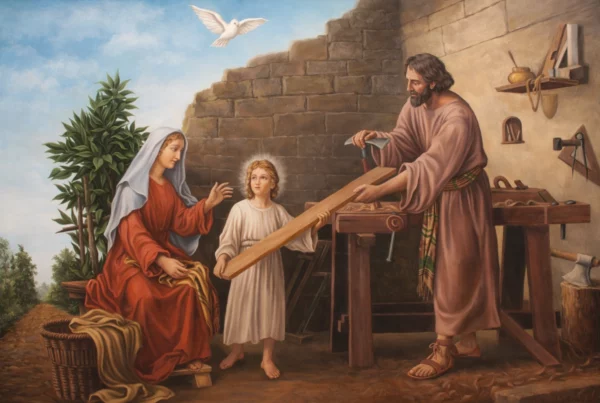
Following a tradition dating back to the Renaissance painters, Mohsen has also devoted himself to religious painting, creating and restoring works for churches and parishes. Among the most significant works in the Archive are The Finding of Moses and Saint Joseph, the latter being one of the artist’s final paintings.
Portraits
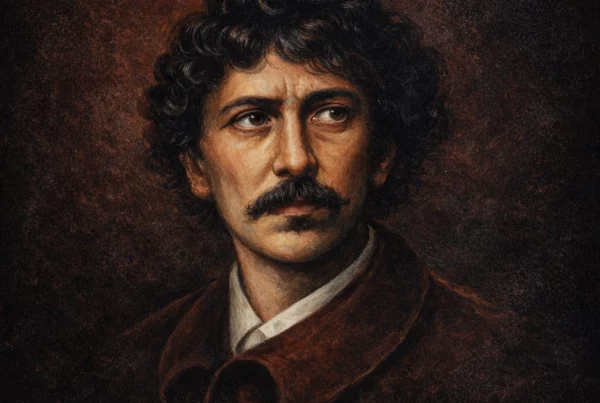
Portraiture plays a significant role in Mohsen’s work. In his portraits, the artist seeks not only physical resemblance, but also a psychological and symbolic dimension. Among his best-known works are the Portrait of Charles Garnier, a copy of Vermeer’s Girl with a Pearl Earring, and several versions of the Portrait of Princess Noura Bent Bandar Al Saud, interpreted as a symbol of maternal love.
Landscapes
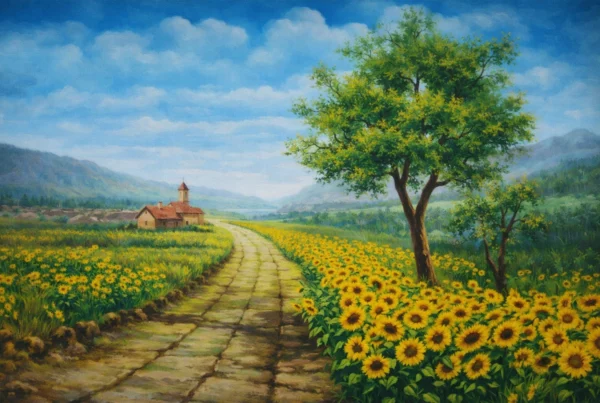
His landscape paintings include views of the Ligurian coast, Poland and bucolic scenes. In these works, Mohsen combines his observation of nature with a symbolic sensibility that transforms the landscape into a broader representation of the relationship between humanity and the environment.
Still Life
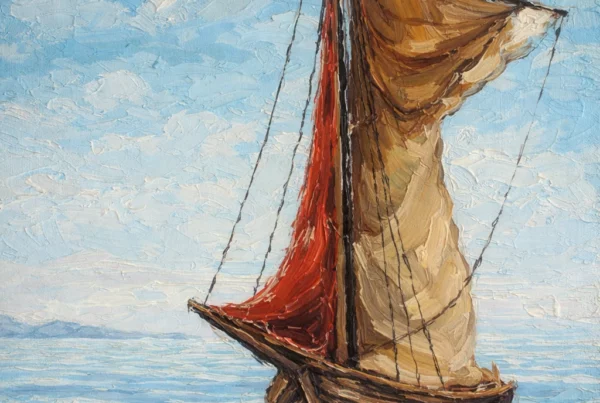
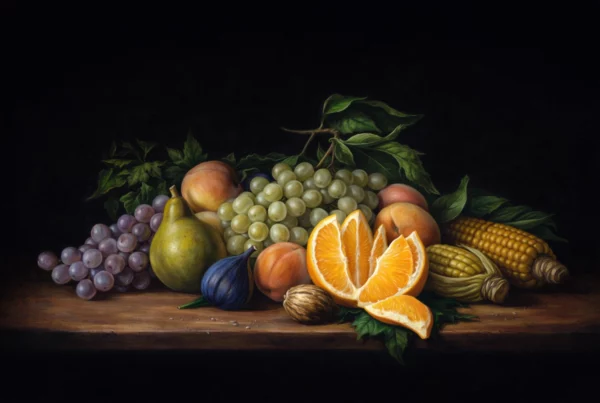
Still lifes are the genre in which the artist’s technical skill is particularly evident. The compositions include traditional subjects and themed works, such as The Hunt, Fishing and The Three Arts, in which the attention to light, texture and composition reveals the strength of his training in figurative art.
Monumental cabinetmaking
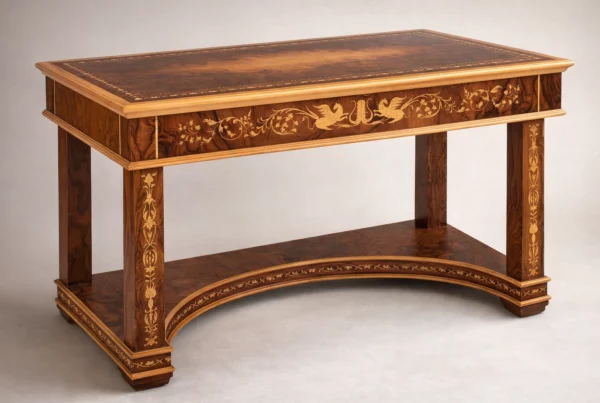
Mohsen’s symbolism also extends to his artistic cabinetry. The wood inlays on his furniture often contain symbolic meanings. A prime example is the Poker and Three-Card desk, commissioned by an Egyptian businessman. Upon delivery, Mohsen explained the meaning of the inlay: ‘The desk serves to warn whoever sits opposite you: he thinks he is playing poker, whilst you are playing the three-card game.’ Offended by the reference, the client rejected the piece.