Description
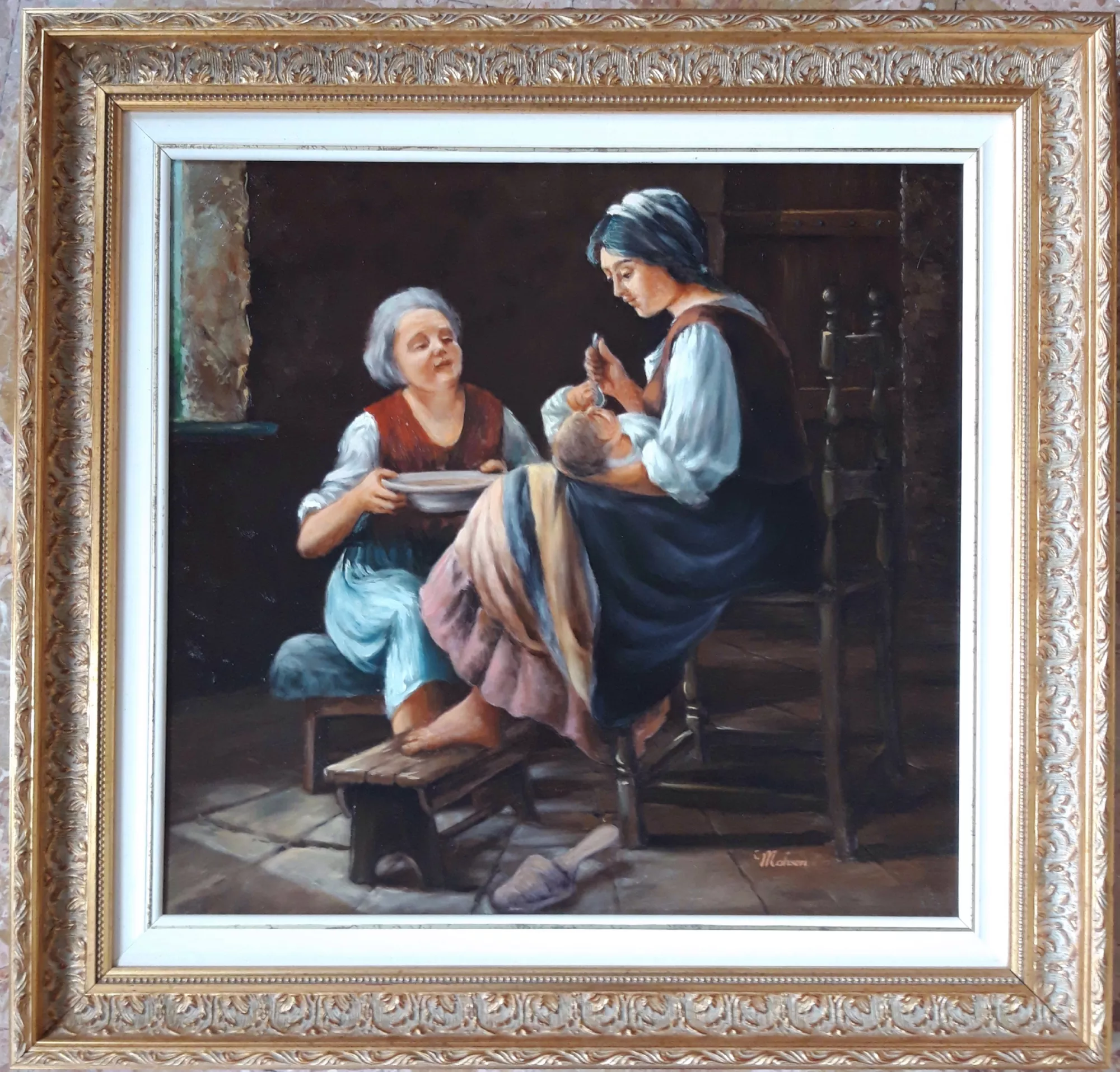
In The spoiled child, Aly Mohsen addresses childhood not as a realm of absolute innocence, but as a fragile space of education and moral formation. The painting offers a figurative reflection on the risks of emotional and material excess, depicting a child surrounded by disproportionate care that transforms affection into indulgence devoid of restraint.
The scene unfolds within a traditional domestic interior, where the act of feeding acquires an ambiguous symbolic meaning: not a gesture of growth, but a mechanism of dependency and demand. The child, positioned at the center of the composition, dominates the space with an assertive posture, while the adult figures appear subordinate, visually expressing a distortion of educational roles.
The composition is deliberately unbalanced and dynamic: the child’s body concentrates visual attention, while focused, direct lighting emphasizes gestures and objects associated with consumption. The chromatic palette, more vivid than in the companion work The poor children, reinforces the sense of excess and moral tension.
The painting engages in direct dialogue with The poor children, forming part of an ethical and narrative diptych centered on themes of education and adult responsibility—key elements in Aly Mohsen’s figurative research.
The work is completed by an original, wide, finely decorated gilded frame, which accentuates visual opulence and strengthens the symbolic contrast between formal richness and the moral complexity of the subject.


