Description
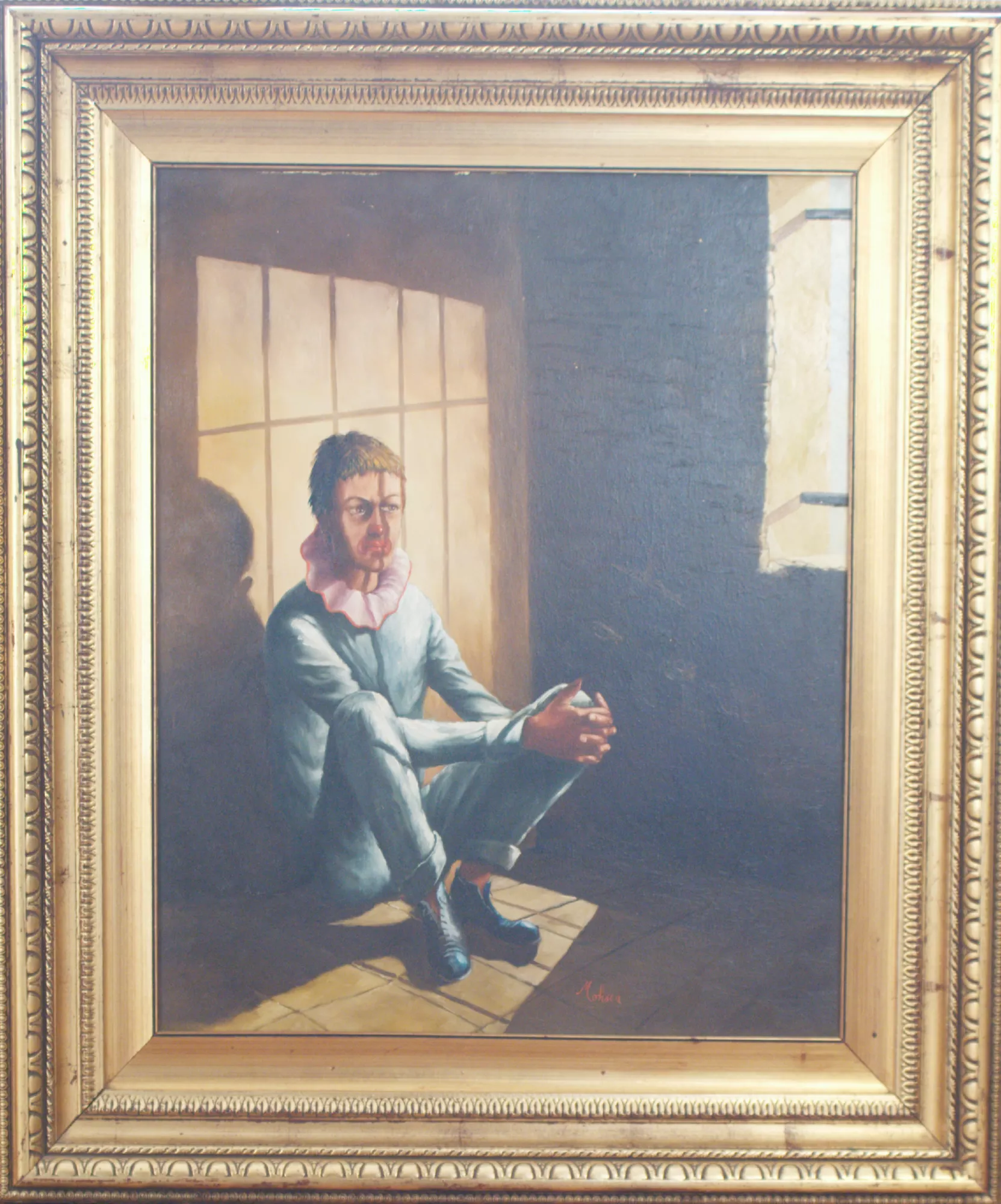
Frustration is a work of strong symbolic and social impact in which Aly Mohsen addresses the universal themes of injustice and inner suffering. The painting depicts a clown seated in a bare prison cell, isolated in space and silence, captured in a withdrawn pose that intensifies the psychological weight of confinement.
A central element of the composition is the light filtering through a window, casting the shadow of prison bars across the clown’s face. This powerful chiaroscuro effect becomes a visual metaphor for the human condition, suspended between oppression and hope. The choice of the clown—a figure traditionally associated with joy and entertainment—amplifies the emotional contrast of the work: the one meant to bring happiness is here the victim of profound injustice. In the expression of the face, sadness, anger, and determination converge, shaping a narrative that is both intense and timeless.
The work is dedicated to all victims of wrongful imprisonment and belongs to the artist’s most conceptual and socially engaged body of work. For this reason, it holds particular interest for collectors and art investors attentive to contemporary art with strong ethical, symbolic, and narrative content. Light acquires an additional meaning, standing for truth and the hope that it may ultimately emerge, leading to vindication and redemption.
From a technical standpoint, the painting demonstrates a measured application of paint, with brushwork alternating between compact surfaces and softer, blended passages. The rendering of materials — skin, fabric, masonry, and flooring — relies on tonal variation and careful handling of pictorial matter, serving both formal clarity and narrative coherence.
The frame, crafted in wood with a gilded finish and classical decorative moldings, defines the boundary of the image and stabilizes its visual reading, separating the represented space from the surrounding environment and presenting the scene as a complete and autonomous unit.


